
 |
 |
News Features
After Months Of Flooding, Big Change In Astor
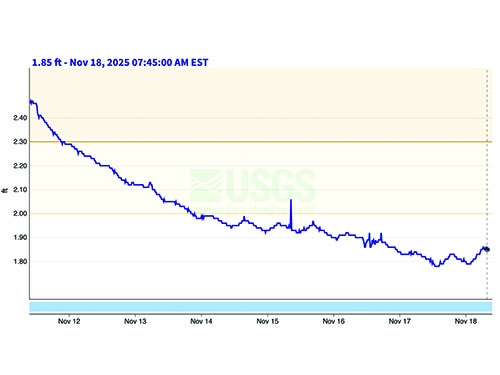
Reduced precipitation and favorable wind conditions have resulted in greatly improved conditions along the St. Johns River in Astor. In the past week, the river has seen a dramatic change in its height, plummeting out of flood stage while dropping almost a foot from Tuesday, November 11.
Data provided by the US Geological Survey indicates the river was at 1.78 feet late Monday, down from 2.59 feet last Tuesday. Flood ‘action’ stage is determined to arrive at 2 feet, with the river first dropping below that level on Friday, November 14. This past week’s decline is the first time the river has been out of flood stage since late August, with the water level peaking in mid-October after a large rain event in Central Florida.
The St. Johns River is fed by waterways throughout the region, with its northerly flow impacted greatly in the Astor area due to a narrowing of the river and and winds from the north blowing across Lake George. In certain conditions, the river’s flow and be slowed, or even reversed, with Astor bearing the brunt of such conditions. Flooded streets and homes have become common in recent years during the fall.
This year’s flood season fell short of last year’s generational record, when flooding rose above 4 feet and residents were forced from homes in large numbers.
This week, the river’s level is actually below its historic median level for this date, which comes in around 2.13 feet.
As a result of the improved conditions, boating restrictions that had been put in place during the flood have been lifted. Those restrictions involved speed and wake restrictions designed to reduce the risk of shoreline and property damage during high water conditions.
Historical restrictions and no-wake zones remain in effect.
The Outpost Publishing Company
P.O. Box 1099, Umatilla, FL 32784
Phone: 352-669-2430 ~ Fax: 352-669-4644
contact@thenorthlakeoutpost.com